Monday, July 30, 2012

Fishing Report

Libby showing off a nice Estero Bay pompano.
Fishing in both the backcountry and Gulf waters near Fort Myers Beach has been very productive.  Getting out early in the morning is best to beat the late morning heat and the afternoon thunderstorms.

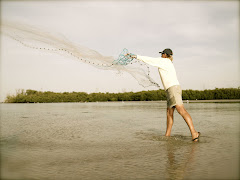
There’s been plenty of live shiners along the beaches and near the passes.  Just keep your eyes open and a cast net on standby.  The schools can pop up just about anywhere.  The threadfin herrings are stacked up on the nearshore reefs.  The Gulf water has cleared quite a bit, so the cast net is tough to use without spooking them.  Go with a sabiki rig for best results.

Speaking of the reef.  The spanish mackerel are everywhere and hungry.  Live bait, live shrimp or shiny artificials will all work.  Heck, it’s tough to get a bait past them if you’re searching for snapper or grouper off the bottom.  The passes are also loaded with macs.  There are ladyfish and small jacks mixed in, which we’ve been keeping and using for shark bait.  You’ll find the toothy creatures in about 14 feet of water.  Anchor up, chum up and be patient.  They’ll show up in pretty good numbers once the smell works it’s magic.

The redfish bite in Estero Bay remains good but you have to get on them early.  Once the heat of the day sets in, they pretty much disappear.  We’ve been getting them close to the mangrove edges using live shrimp under popping corks and cut ladyfish on the bottom.  There’s been a mix of flounder, trout, black drum and keeper size snapper in the same areas.

Sea trout are on the open grass flats.  Live or artificial shrimp under corks has been the go-to.  Start looking for them in about 3 feet of water and as the day heats up, move out a bit deeper.  We’ve caught quite few nice ones in 5 plus feet in the afternoon.  You might even get a nice surprise from a big pompano!

Monday, July 16, 2012

Vacation In The Florida Keys

JoNell and I packed up the Jeep and headed down to the Florida Keys for a week’s vacation on Marathon.  We were invited to stay there with friends Alex Dolinski and his wife Brenda over the 4th of July holiday.  Alex rents a house near Vaca Cut for a month to run charters out to the deep blue for mahi-mahi, wahoo, sailfish, marlin and whatever else may show up in the trolled spread.  He blocked out time for us to fish, dine and enjoy a break playing on and in the clear water. 

I know what some of you are thinking.  “You took a vacation from fishing to go fishing?”  Right.  I did.  You have to understand, I take people fishing and usually don’t get to wet a line myself.  Don’t worry there are also plenty of other things to do while in the Keys.


The house Alex rented was perfect.  Lots of room for everyone (Alex’s daughter Danielle  was there and Ken, the owner of Master Bait and Tackle visited for a few days) and right on the water with a view of the Atlantic Ocean.  The dock and deck was big enough to accommodate the boat, a Venture 34, and lots of porch chairs for evening cocktails and cigars.  Speaking of the boat.  The Venture was on loan from Andy, a friend of Alex’s.  What a nice ride.  Big and roomy with a tower for spotting fish and a head (bathroom) for the ladies.  Fully equipped with all the electronics you could ask for and enough rod holders for 39 rods.  Hmm... might need ‘em you never know.


We plotted the next day’s strategy each evening and then set out just after sunup.  We’d motor out to where the water turned from sea green to a deep blue.  The depth was from about 700 to 1000 feet.  Trolling was the go-to tactic and I got a crash course on how to rig trolled ballyhoo and how to set outriggers.  I’ve got to tell you, Alex is a great instructor.  Once the baits were set it was time to watch for birds and weed lines.  I soon found that Brenda has the best eyes for spotting birds.  She almost always seemed to see them long before the rest of us did.  The trick to trolling is to get the baits near the birds and weed lines in hopes of finding a hungry fish.  Baits tend to hang out near the flotsam for protection.  The birds find the bait and also follow moving fish.  It’s a pretty amazing food chain.

Alex had already warned us that this particular year had been slower than most.  No one seemed sure why, but the consensus was the overly warm winter might have something to do with it.  He was right.  It was slow, but when we did hook a fish it was almost always an event!  The highlights...  JoNell’s 30 pound mahi along with quite a few in the 12 to 15 pound range for the rest of us.  We even managed to get a 22 pound wahoo, the first I’d ever seen or had the pleasure of eating.

When we weren’t fishing we were relaxing or eating or drinking or... all of the above.

  We hit quite a few places for lunch and dinner but my favorites were the Lazy Days Restaurant in Marathon and the No Name Pub on Big Pine Key.  

The Lazy Days was right on the water and had a chef that obviously knew what he was doing.  They also had a “cook your catch” menu that was right up our alley.  We caught fresh fish, but who wants to cook while on vacation?  On two different occasions we took mahi and wahoo there for a seafood feast.  Wonderful!  

The No Name Pub is one of those places you have to visit while in the lower Keys, but only if you can find it.  Seriously.  Their slogan is “ a nice place if you can find it”.  They aren’t kidding.  A GPS certainly comes in handy.  Once found there are a couple of things on the menu you need to try.  Number one, the Caribbean wings.  Oh my.  I’m a self proclaimed buffalo wing nut and these were the best I’ve ever had.  Number two the pizza.  They have delicious pizza.  I don’t know why a little bar in the middle of nowhere with “no name” has great pizza, but just go with it.  You won’t regret it.


Toward the end of the week JoNell and I opted out of fishing and headed down to Key West.  We made a stop at Schooner’s Wharf to listen to Michael McCloud, Mango’s for lunch, the Hemingway House to visit the 6-toed cats, Kelly’s Bar and Grill for tacky frozen tourist drinks and a couple of cigar factories.   It was a fun, relaxing day and good to be back in a place that has so many good memories for the two of us.


Back in Marathon we caught more fish, went snorkeling at Sombrero Reef, ate more food, drank more drinks and watched the 4th of July fireworks from the boat.  Thanks much to our hosts Alex and Brenda for a great time.  That was fun!

July Fishing Report

Mid summer is already here and that means showers will occur almost each and every afternoon from now through September. The good news is, the mornings are usually rain free with light breezes and cooler temperatures. Work the mangroves of the backcountry early and then move out to the Gulf waters in the late morning. That will give you a break from the heat and the best opportunity to catch fish.

The nearshore Gulf rock piles and reefs are producing a nice mixed bag of fish. Spanish mackerel are leading the way and will take small bait offerings on jigs as well as just about any artificial that's flashy. You'll also get trout, pompano, grunts and sheepshead. For the latter you'll need to get through the macs. Cast away from the boat, leave the bail of the reel open and let the jig slowly sink to the bottom. Then retrieve the offering slowly across the bottom.

Grouper and mangrove snapper are also in the mix. We've been dropping wighted cut baits on circle hooks to the bottom. A stout rod is a good idea and be prepared for the unexpected. There are some big goliath grouper hanging out in less than 20 feet of water along with lemon, hammerhead and blacktip sharks.

In Estero Bay the redfish have been sparse but still doable if you get out early. We've only been getting 2 to 4 per trip but they have all been mid to upper slot fish. Live shrimp under a cork works well and helps cover a lot of ground. Once we locate a red I've been switching to cut ladyfish on circle hooks. The smell will usually bring in another fish or two and may even produce a nice snook.

In the ‘fun fish' category... Keep your eyes open for big jacks busting bait on the surface. They are schooling up early and late in the day and love a fast moving artificial bait imitation.

Thursday, June 21, 2012

The early part of last week brought calm seas and a batch of beautiful weather, but a more tropical outlook is in the forecast.  It’s back to southerly breezes with the chance of showers for the upcoming weekend.  But don’t fret.  The chance of rain and low pressure usually leads to a good bite, along with plenty of fish to catch for those that are willing to pack the foul weather gear.

The nearshore bite was top notch before the winds picked up.  The May Reef was giving up lots of spanish mackerel, big trout and a mix of sheepshead, flounder, pompano and snapper.  Live shrimp on a jig head moved slowly across the bottom worked best.  Switching to cut bait dropped to the bottom produced grouper and quite a few big sharks. 

The backcountry flats in Estero Bay are trout central.  They are everywhere in all sizes.  Live shrimp under popping corks is the go-to, but don’t forget to try artificials.  Berkley Gulp Shrimp and D.O.A. Shrimp are both getting attention. 

Redfish are a bit more spread out along the mangrove shorelines.  You’ll need to work hard to get them by moving from spot to spot.  Cut ladyfish and threadfin herrings are working along with live shrimp on jigs.

There’s been a noticeable uptick in the amount and size of flounder being caught in the bays.  Over the years we’ve been getting one or two a week and they aren’t normally  something we target in our waters.  But over the past year the numbers are up.  I’m not sure why, buy my anglers are enjoying it!  We picked up 4 of them a couple of days ago along the mangrove edges while searching for redfish.  The best tackle / bait combo seems to be a popping cork, short leader, 1/4 oz. jig and live shrimp.

Wednesday, February 15, 2012

Follow my fishing reports on Facebook

For those of you Facebook users... SoulMate Charters has a site on FB and I post weekly fishing reports, photos and what's happening on the water in the southwest Florida area.

Simply click on the title of this article and stop by and take a look!

Fishing in February can be tough but fun


As I write this we are bouncing back from a February cold front with warm days and cool nights that are much more representative of our normal winter weather. However, it still feels much cooler to those of us that live here year round. My brother reminded me that before I took up guiding for a living we use to avoid fishing in the months of January and February. It was just too cold for man or beast to be on the water! Because of this we really never had to think much about tactics for finding fish in the winter months. We spent that time tying flies, repairing boats and fishing gear and watching football and basketball on TV.

Our time for fishing was in the spring, summer and fall looking for tarpon, snook, redfish and trout. It was easy. We caught live shiners; we put them on a hook and threw them in front of the fish. Fish on! OK… Maybe it wasn’t quite that easy but it was a whole lot better than putting on three layers of clothing and not even seeing a tarpon or snook the entire day.

But then I decided to take fishing on as a profession and because of the proliferation of winter guests during that time of year, I was forced to deal with the less than ideal weather and to learn the patterns of angling in January and February.

So here is a bit of what I’ve learned.

The best bait for winter fishing is live shrimp; period. Fish love shrimp, especially in the cold water months. It moves slow and provides an easy meal. Fish really don’t want to chase anything fast moving when the water temperature drops below 65 degrees. Their metabolism has slowed down so they are in no way as aggressive as they are in warmer water.

The two best fish to hunt for in January and February are sheepshead and spotted sea trout. Both not only do well in the colder water, they seem to enjoy it. Sheepshead can be found around dock pilings and oyster beds as well as in deep pockets under mangrove overhangs. While I’ve heard a bunch of suggestions on how to catch them, I keep it pretty simple. I like small 1/8 oz. purple jig heads with 1/0 hooks. I then place half of a live shrimp on the hook and then cast to the target. The trickiest part is the hook set. You’ve got to almost anticipate the bite to be successful. They are the best bait stealers in the business! My youngest daughter’s advice is this. “When you feel a sheepshead tap the bait, count to 3 and go on 2.”

Trout fishing in the winter is a bit different than going after them in the summer months. They move from the shallow water flats to deeper areas often very near to where you would normally find them in the warmer months. I suggest starting in depths a little better than 4 feet. The best areas seem to be where you have some grass beds mixed in with small sandy potholes. For example, check out the flat just to the north of the power lines in Pine Island Sound. My favorite way to fish for them is similar to going after the sheepshead. I use a 1/4 oz. yellow jig head with a 1/0 or 2/0 hook. I take the tail off of the live shrimp and then thread the hook through the opening where the tail use to be. You can run the hook up through the body or down toward the legs. I’ve found it really doesn’t matter all that much. Make a cast and use a very slow jigging action while retrieving the bait. You need to get down near the bottom but not so close that you are picking up grass on the retrieve. The winter trout bite is not much more than a dull bump so if you feel anything at all, set the hook. Oh yeah, I use the yellow jig because you never know when you are going to come upon a pompano while trout fishing. It seems their favorite color is yellow.

While these 2 species are what I’d target on the coldest days, they are by no means the only fish out there. The water temperatures are going to move up and down quite a bit during February and this will bring the opportunity for catches of spanish mackerel, bluefish, pompano, ladyfish and a lot of small sharks. All kidding aside, it really is a great time to wet a line and it beats sitting inside watching fishing shows on television!

Friday, September 2, 2011

Naples Botanical Garden

Walking through the entrance to Naples Botanical Garden is a treat for the senses. There's really no way to even begin to describe its scope. For some reason I pictured something smaller like the gardens of my youth in Clearwater and at our current home in Fort Myers. Was I ever wrong.

The Garden grounds cover 170 acres that feature plants from the subtropics. This includes places like Brazil, the Caribbean, Southeast Asia and Florida. Everything from the wetlands and swamps to the dry and arid is represented and it's laid out in a way that lets you feel as if you are time traveling from one section of the world to another. There are huge water gardens with beautiful lilies and trickling waterfalls and large expanses of open lowlands with sawgrass. There are even rice patties planted and cultivated in the Asian area.

The Naples Botanical Garden was originally founded in 1993, closed for expansion in June of 2007 and reopened to the public in November of 2009. Expansion has continued and the result is a world class, award wining garden.

My visit was made possible as part of the Florida Outdoor Writers Association annual conference. It's held each year in a different area of Florida to help introduce writers to the featured location. During a group tour I was able to speak to executive director Brian Holley and came away with these interesting tidbits.
  • Seventy acres of invasive melaleuca and Brazilian pepper were removed and turned into thousands of yards of mulch during the reconstruction.
  • Over a 1/4 of a million yards of dirt was moved around the site to make the highlands and lowlands.
  • During construction thousands of native plants were saved to be planted later.
  • There are currently over 7500 different kinds of plants.
  • There are currently 1000 plus orchids.
The pride in Brian's voice was evident, as it should be. This was a massive undertaking that you'll have to see to believe.

I walked the shell, stone and dirt paths though a good part of the area, but time was pressing and I soon realized that this is more than a quick tourist stop along US 41. I believe you could plan an entire morning or day at the Naples Botanical Garden and still not see it all.

The Garden is open from 9am to 5pm daily. Admission is $12.95 for adults and $7.95 for children 4-14 years old. 3 and under are free. There are also memberships available and members admission is free. Each Tuesday "Early Bird" hours are offered from 8am until 12pm. This gives amateur photographers and painters some quiet time and early morning light.

For more information go to www.naplesgarden.org

Capt. Rob Modys
SoulMate Charters